Biodiversity
Invasive Species
Although there are almost 2,000 established non-native species in Great Britain, only a small number of these are considered to be threateningly invasive
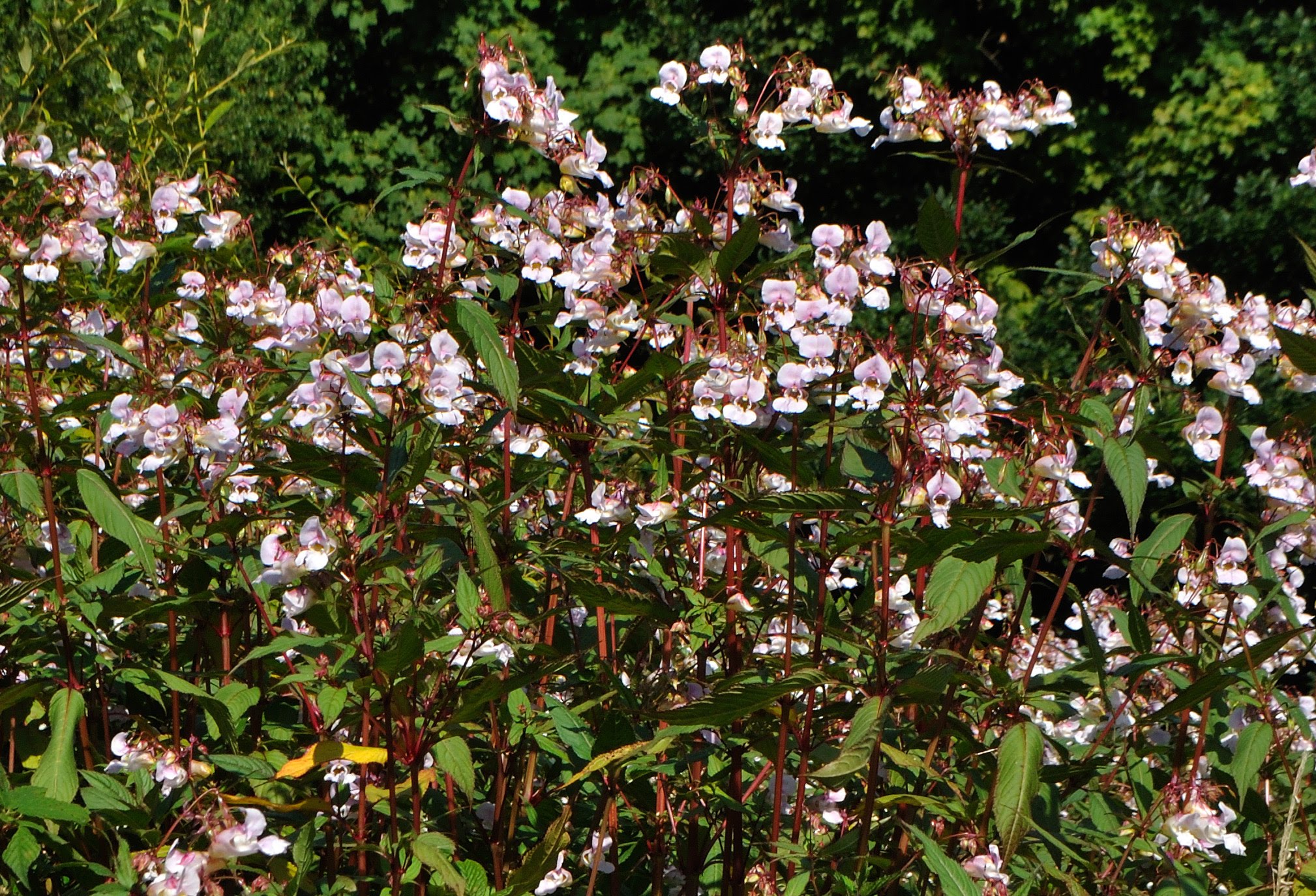
These include several species of plant, namely: American skunk cabbage (Lysichiton americanus), broad-leaved bamboo (Sasa palmata), giant rhubarb (Gunnera tinctoria), Cotoneasters (Cotoneaster spp), Himalayan balsam (Impatiens glandulifera), hottentot fig (Carpobrotus edulis), Japanese knotweed (Fallopia japonica), pirri-pirri bur (Acaena novae-zelandiae), rhododendron (Rhododendron x superponticum), Spanish bluebell and hybrid (Hyacinthoides hispanica and H. hispanica x H. non-scripta) and variegated yellow archangel (Lamiastrum galeobdolon subsp. argentatum).
Of these, rhododendron, Japanese knotweed and Himalayan balsam are recognised as problem species in Wales, while water fern Azolla filiculoides and New Zealand pygmyweed Crassula helmsii can also be problematic.
The total annual cost of invasive non-native species to the British economy is estimated at £1.7 billion, so the potential for economical benefits is considerable, particularly in being able to predict the spread of these species. Remote technologies have a role to play in mapping the distribution of all of these problematic species.
One aim of the Living Wales programme is to detect changes in the extent and distribution of the threateningly invasive species in Wales. We are interested in information not only on locations dominated by invasive species, but also on the locations that invasive species are starting to colonise.